How to Get Approval for a Work Conditioning Program: A Texas Case Study
Work conditioning approval in Texas workers' compensation is usually not won by saying the injured worker still needs more therapy. It is won by showing the functional gap between what the worker can safely do now and what the job actually requires.
That distinction matters.
Traditional physical therapy documentation often explains impairment. It may describe pain, range of motion, strength deficits, treatment response, and functional complaints. That information is important, but it may not be enough to justify an intensive work conditioning program.
Work conditioning is different from standard outpatient therapy. It is an occupational rehabilitation program designed to improve work-specific strength, endurance, material handling ability, positional tolerance, cardiovascular tolerance, and job task performance. To get approval, the documentation needs to show why the worker is not ready for full duty and why a structured, work-focused program is medically necessary.
In Texas, the most defensible workflow is usually:
- Document that traditional therapy has plateaued.
- Obtain a physician order for a Functional Capacity Evaluation.
- Perform an initial FCE to measure current work capacity.
- Compare the FCE results to the employer's job demands.
- Use that functional gap to support a physician-signed work conditioning plan of care.
- Submit a complete preauthorization package for work conditioning.
This article uses a Texas case study to show how that process works in practice.
Why Work Conditioning Requests Get Denied
One of the most common reasons work conditioning requests fail is that the request is built around the wrong kind of evidence.
A note that says, “The patient continues to have pain and weakness and would benefit from additional therapy,” may be clinically true.
But it does not clearly answer the utilization review question.
The better question is:
What specific job demands can the injured worker not safely meet, and how will work conditioning close that gap?
That is why a Functional Capacity Evaluation becomes so important. The FCE is not simply another therapy visit. It is a structured performance-based assessment used to document safe functional capacity, work tolerance, material handling ability, positional tolerances, effort consistency, and the relationship between current function and required job demands.
When the FCE is paired with a Physical Demands Analysis or employer job description, it can clearly identify the gap between the worker's current ability and the essential physical requirements of the job.
The Texas Case Study
Consider a warehouse worker in Texas who sustained a compensable low back injury while lifting product from the floor to a pallet. The worker completed a course of traditional physical therapy. Lumbar range of motion improved. Pain decreased. Basic strengthening improved.
But the worker is still not ready for full duty.
The employer's job description requires:
- occasional lifting up to 50 lb from floor to waist
- frequent lifting of 25 lb
- frequent standing and walking throughout the shift
- occasional pushing and pulling of loaded carts
- repeated bending, crouching, and material handling
- ability to sustain activity across a full workday
At the end of traditional therapy, the treating therapist can document improved impairment findings, but there is still uncertainty about whether the worker can safely meet the physical demands of the job.
This is the moment where many clinics make the mistake of requesting work conditioning based only on general ongoing limitations.
A stronger workflow is to first establish the functional gap.
Step 1: Document the Traditional Therapy Plateau
The treating therapist should clearly document that the worker has completed appropriate traditional rehabilitation and that further standard therapy is unlikely to resolve the remaining occupational limitation by itself.
The documentation should not simply say “plateau.” It should explain what has improved, what remains limited, and why the remaining limitation is work-specific.
For example:
- lumbar range of motion has improved but repeated bending remains limited
- basic strength has improved but material handling tolerance remains below job demand
- pain is reduced but prolonged standing and lifting still increase symptoms
- the worker can complete clinic exercise but cannot yet demonstrate job-level endurance
- full-duty return to work remains uncertain without objective functional testing
This creates the clinical rationale for the next step: an initial FCE.
Step 2: Obtain a Physician Order for the FCE
In the Texas workflow, the treating therapist may recommend the FCE, but the FCE should be supported by a physician order, referral, or signed plan of care.
The request should be direct:
Functional Capacity Evaluation requested to objectively determine current work capacity, compare current functional abilities to the employer's job demands, and determine whether work conditioning is medically necessary to support safe return to work.
This keeps the purpose of the FCE clear. The evaluation is not being ordered as a generic test. It is being ordered to answer a specific occupational rehabilitation question.
Step 3: Perform the Initial FCE Before Requesting Work Conditioning
In this case, the initial FCE should be performed before the work conditioning preauthorization request is submitted.
That sequence is important.
If the clinic requests work conditioning first, the carrier or utilization review agent may ask for objective evidence that the worker has a functional gap. Without the FCE, the clinic may only have impairment data and general therapy notes.
The initial FCE should measure the physical abilities most relevant to the job, including:
- floor-to-waist lifting
- waist-to-shoulder or waist-to-overhead lifting, when job-relevant
- carrying
- pushing and pulling
- bending, crouching, kneeling, or squatting
- sitting and standing tolerance
- walking or cardiovascular tolerance
- grip and hand function, when relevant
- movement quality, effort consistency, symptom response, and safety
For Texas workers' compensation, the FCE report also needs to be structurally complete. Texas-specific FCE documentation should include the required clinical examination elements, physical capacity measures, functional abilities testing, and cardiovascular endurance testing using the required approach. A poorly structured FCE report can create unnecessary reimbursement and audit problems even when the clinical testing itself was reasonable.
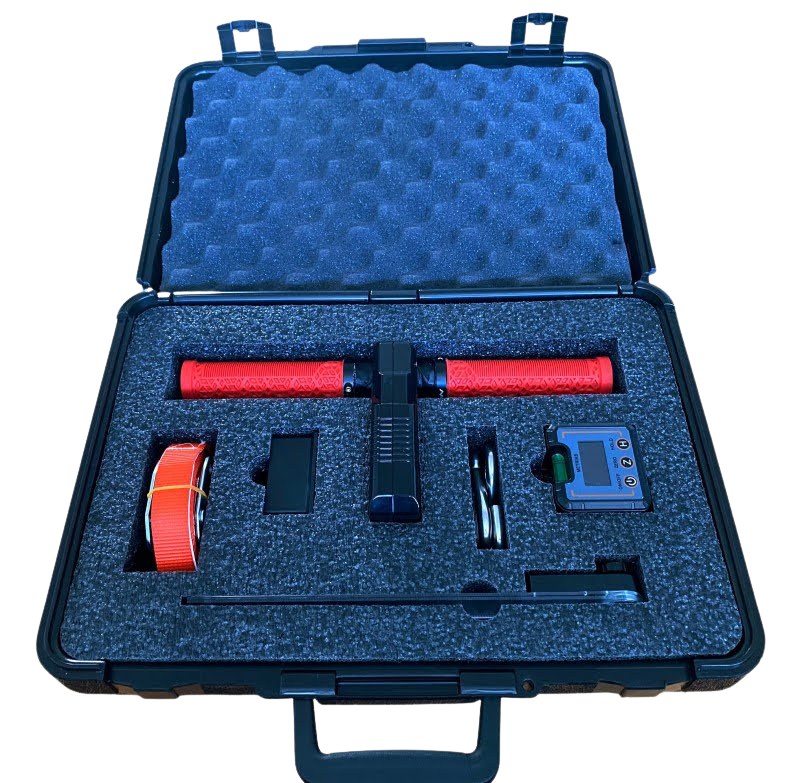
For clinics building an FCE service, this is where standardized testing equipment, consistent reporting language, and defensible documentation matter. Related resources include FCE Certification, FCE Software, and FCE in a Box.
Step 4: Identify the Functional Gap
The functional gap is the difference between the worker's current demonstrated capacity and the physical demands of the job.
In the warehouse case study, the FCE might show:
- safe floor-to-waist lifting demonstrated to 30 lb occasionally
- job demand requires floor-to-waist lifting up to 50 lb occasionally
- safe frequent lifting estimated at 15 lb
- job demand requires frequent lifting up to 25 lb
- standing tolerance limited to 45 minutes before significant symptom increase
- job demand requires frequent standing and walking across the shift
- pushing and pulling tolerance below the loaded cart demand
- bending and crouching tolerance below job task frequency
That is the core approval argument.
The worker is not simply “still sore.” The worker has measurable work-related limitations that prevent safe full-duty performance.
Work conditioning is then framed as the intervention designed to close that gap through progressive work simulation, material handling progression, cardiovascular conditioning, positional tolerance training, and job-specific task practice.
Step 5: Build the Work Conditioning Plan Around the Gap
The work conditioning plan should not be generic.
It should be built directly from the FCE findings and the job demands.
For this worker, the plan may include:
- progressive floor-to-waist lifting from 30 lb toward 50 lb
- frequent lifting circuits progressing toward 25 lb
- graded standing and walking tolerance
- loaded push/pull progression
- repeated bending and material handling tasks
- cardiovascular conditioning to support sustained work tolerance
- education on pacing, body mechanics, and safe task performance
- measurable weekly goals tied to full-duty requirements
This is the same principle discussed in Guidelines for Work Conditioning/Hardening Programs: work conditioning should bridge the gap between traditional rehabilitation and the physical demands of the job.
The program should be specific enough that the reviewer can see why ordinary outpatient therapy is no longer the correct level of care.
Step 6: Submit a Complete Preauthorization Package
The work conditioning request should be submitted as a complete package, not as a short note asking for more treatment.
A strong Texas work conditioning preauthorization package should include:
- the work conditioning preauthorization request form required by the carrier or utilization review agent
- the initial FCE report documenting current functional capacity
- the employer's Physical Demands Analysis or job description
- the treating physician's signed order and plan of care
- recent therapy notes showing the plateau from traditional therapy
- a clear explanation of the functional gap
- measurable work conditioning goals tied to job demands
- the requested duration, visit frequency, and total program hours
In many Texas cases, work conditioning is requested using CPT 97545 for the first two hours and 97546 for each additional hour. The clinical justification should explain why the worker requires a structured work conditioning program rather than more standard therapeutic exercise.
The Approval Argument in Plain Language
The approval argument should be simple enough that a reviewer can understand it quickly:
The worker completed traditional therapy and improved, but still cannot safely meet the verified physical demands of the job. The initial FCE objectively documents the functional gap. Work conditioning is requested to close that specific gap through progressive, job-focused rehabilitation.
That is much stronger than:
The patient still has pain and would benefit from more therapy.
The first statement is occupational rehabilitation.
The second statement is a general treatment request.
Where the Peer-to-Peer Call Can Matter
In Texas workers' compensation, a work conditioning request may be reviewed by a utilization review agent. If the reviewer does not believe the submitted documentation clearly establishes medical necessity, a peer-to-peer call may be requested.
The best person for that discussion is often the clinician who understands the FCE results, the job demands, and the functional gap.
The peer-to-peer discussion should stay focused on:
- the worker's current demonstrated capacity
- the verified physical demands of the job
- the specific mismatch between the two
- why standard therapy is no longer sufficient
- how work conditioning will address the gap
- how progress will be measured
This is not the time to argue generally that the worker “needs more rehab.” The strongest position is to explain the functional data.
Using the Three-FCE Model Across the Work Conditioning Program
Texas workers' compensation rules generally recognize a limited number of reimbursable FCEs per compensable injury, with different practical roles across the work conditioning timeline.
In a work conditioning case, those FCEs may be used strategically:
- Initial FCE: performed before the program to document baseline capacity and justify the work conditioning request.
- Interim FCE: performed mid-program when objective progress data are needed to support continuation or extension.
- Discharge FCE: performed at the end of the program to document final work capacity and return-to-work recommendations.
This gives the clinic a defensible clinical framework:
measure the gap, treat the gap, re-measure the gap.
What Clinics Should Avoid
Clinics can weaken their own work conditioning requests by submitting vague or incomplete documentation.
Common problems include:
- requesting work conditioning before measuring current work capacity
- failing to obtain or document job demands
- using only pain and impairment findings to justify the program
- failing to explain why traditional therapy is no longer sufficient
- submitting a generic plan of care that is not tied to the job
- failing to identify measurable work-specific goals
- not being available for peer-to-peer clarification
- using an FCE report that does not meet Texas documentation expectations
Approval depends on clarity. The reviewer should be able to see the worker, the job, the gap, and the plan.
How This Applies Beyond Texas
This article uses Texas as the case study because the workflow is especially clear: initial FCE, job demands comparison, functional gap documentation, physician plan of care, and work conditioning preauthorization.
But the core principle applies far beyond Texas.
Whether the claim is in Texas, another workers' compensation system, long-term disability, employer-based occupational rehabilitation, or private return-to-work planning, the same clinical logic applies:
A work conditioning program is easier to justify when the need is tied to specific functional job demands rather than general ongoing symptoms.
Related Metriks Resources
Equipment and Software for FCE and Work Conditioning Documentation
Clinics that perform Functional Capacity Evaluations or support work conditioning referrals need a standardized way to measure, document, and report work capacity.
Metriks resources that may support this workflow include:
Frequently Asked Questions
Does work conditioning usually need preauthorization in Texas workers' compensation?
Yes. Work conditioning is typically handled as a preauthorized return-to-work rehabilitation service. The request should be supported by objective documentation, a physician plan of care, job demand information, and a clear explanation of medical necessity.
Should the FCE happen before the work conditioning request?
In many Texas cases, yes. The initial FCE provides the objective functional data needed to show the gap between the worker's current capacity and the physical demands of the job.
What is a functional gap?
A functional gap is the measurable difference between what the injured worker can safely do now and what the job requires. For example, the worker may demonstrate safe occasional lifting to 30 lb, while the job requires occasional lifting to 50 lb.
Is pain enough to justify work conditioning?
Pain is clinically relevant, but it is usually not enough by itself. The stronger justification is the relationship between symptoms, objective functional limitations, job demands, and the specific need for a work-focused rehabilitation program.
What should be included in the work conditioning request?
The request should include the preauthorization form, initial FCE report, job description or Physical Demands Analysis, physician order or plan of care, recent therapy notes, functional gap explanation, and measurable work-specific goals.
What is the role of the treating physician?
The treating physician reviews the functional data and signs the order or plan of care for work conditioning. The FCE provides objective information, but the physician remains central to the medical authorization process.
Can the same FCE support both approval and program design?
Yes. A well-designed FCE can support medical necessity, identify treatment priorities, establish baseline work capacity, and guide the specific progression used during work conditioning.
Conclusion
Getting work conditioning approved in Texas is not just an administrative task. It is a documentation problem and a clinical reasoning problem.
The strongest request connects four things:
- the worker's current functional capacity
- the verified physical demands of the job
- the measurable gap between the two
- the specific work conditioning plan designed to close that gap
That is why the initial Functional Capacity Evaluation is so important.
It turns a general request for more therapy into a work-specific rehabilitation plan supported by objective functional testing, job demand comparison, and measurable return-to-work goals.
For rehabilitation professionals, this is the practical shift: do not simply document that the worker is not ready.
Show what the job requires, show what the worker can do, show the gap, and show how work conditioning will close it.