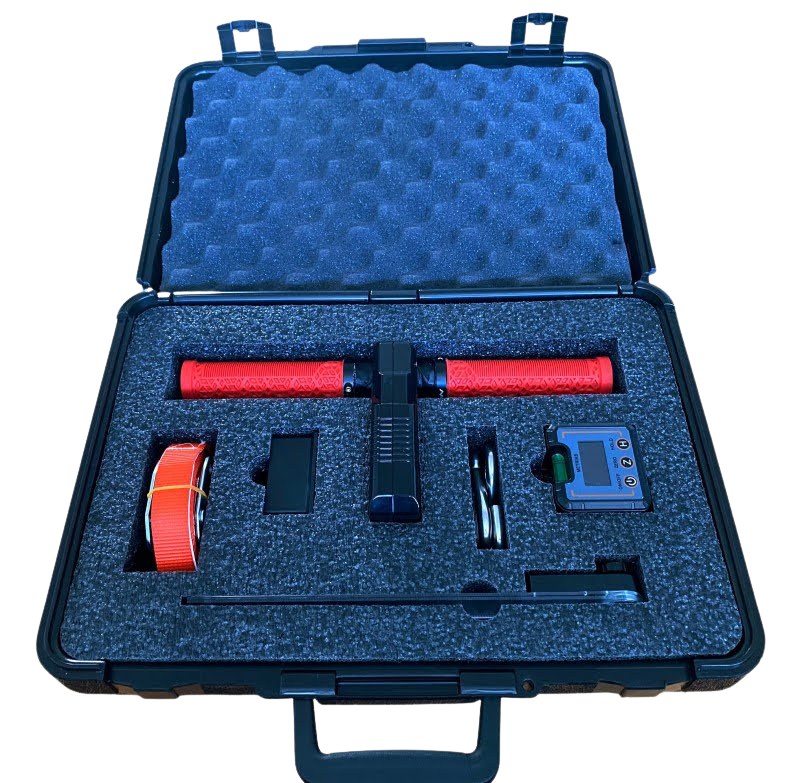
What is a Functional Capacity Evaluation
What Is a Functional Capacity Evaluation (FCE)?
A Functional Capacity Evaluation (FCE) is a comprehensive performance-based assessment used to evaluate an individual's physical abilities and functional limitations in relation to specific work activities, job demands, and other major life activities.
Unlike a diagnostic examination, an FCE is not designed to determine the cause of an injury, establish a medical diagnosis, or predict future recovery. Its primary purpose is to objectively measure what an individual can safely do at the time of testing.
In occupational rehabilitation, Functional Capacity Evaluations are commonly used when a rehabilitation professional, physician, employer, insurer, case manager, or legal stakeholder needs objective information about an individual's current level of function.
The value of an FCE is that it moves the discussion away from estimation and toward measured functional performance.
Why Functional Capacity Evaluations Are Used
Historically, return-to-work decisions were often based on diagnosis, prognosis, and broad restrictions. A physician might write "no lifting" or "light duty" without having objective measurements of the person's actual ability to lift, carry, stand, walk, kneel, crouch, push, pull, or tolerate work-related tasks.
An FCE helps bridge that gap.
The evaluation provides objective, function-based information that can be used to compare an individual's demonstrated abilities to the physical requirements of work. This is especially important when the person has completed treatment but still reports difficulty returning to work, when job demands are unclear, or when there is a mismatch between clinical recovery and real-world work tolerance.
A Functional Capacity Evaluation may be used to support:
- Return-to-work planning
- Work restriction recommendations
- Modified duty or accommodation planning
- Work conditioning or work hardening program development
- Case closure decisions
- Disability management
- Job-specific functional comparison
- Any-occupation capacity assessment
- Medico-legal or insurance-related decision making
The Four Major Components of an FCE
According to the Current Concepts in Functional Capacity Evaluation: A Best Practices Guideline, an FCE includes four major components:
- Intake interview
- Medical records review
- Physical examination
- Content-valid functional testing
These components are not separate boxes to check. They are integrated sources of clinical information.
The intake interview helps the evaluator understand the individual's history, current symptoms, perceived limitations, work history, job demands, treatment history, and concerns about returning to activity or work.
The medical records review helps establish the relevant diagnosis, mechanism of injury, treatment history, surgical history, imaging or diagnostic findings, current restrictions, and any medical factors that may affect safe testing.
The physical examination helps identify impairments such as range of motion loss, strength limitations, neurological findings, swelling, balance deficits, cardiovascular concerns, or other physical findings that may influence functional performance.
Content-valid functional testing evaluates the specific functional tasks relevant to the referral question. This may include lifting, carrying, pushing, pulling, walking, standing, stair climbing, crouching, kneeling, reaching, handling, gripping, or job simulation activities.
What Does an FCE Measure?
An FCE measures functional performance. It does not simply measure strength.
Depending on the referral question, the evaluator may assess:
- Material handling activities such as lifting, carrying, pushing, and pulling
- Postural tolerances such as sitting, standing, walking, kneeling, crouching, crawling, and climbing
- Upper extremity function such as reaching, handling, fingering, gripping, and pinching
- Range of motion and physical impairment measures
- Biomechanical movement patterns
- Cardiovascular and physiological response to activity
- Work pace and endurance
- Symptom response during and after activity
- Consistency and reproducibility of performance
- Observed functional limitations
- Risk of harm during work-related tasks
The purpose is to understand what the person can safely and dependably do under controlled testing conditions.
For example, if a worker lifts a 40 lb crate from floor to waist, the evaluator is not only documenting that the crate was lifted. The evaluator is also observing whether the lift was performed with acceptable mechanics, adequate load control, appropriate cardiovascular response, reasonable symptom behavior, and sufficient consistency to support a functional conclusion.
That distinction matters.
A person may be able to complete a task once, but still demonstrate poor control, unsafe compensatory movement, escalating symptoms, or a response that does not support safe work performance at the required frequency or duration.
Residual Functional Capacity
One of the most important concepts in Functional Capacity Evaluation is residual functional capacity.
Residual functional capacity refers to what an individual can still do despite functional limitations related to injury, illness, impairment, pain, or other health-related factors.
In practical terms, the evaluator is asking:
What can this person safely perform now?
That may include determining whether the person can perform the essential demands of a specific job. It may also include determining whether the person is better suited to sedentary, light, medium, heavy, or very heavy work demands, depending on the purpose of the assessment and the reporting framework being used.
This is why FCE results are often reported in relation to job demands, physical demand levels, DOT classifications, or specific functional restrictions.
An FCE Is More Than a Single Test Result
One of the most common misconceptions about Functional Capacity Evaluation is that conclusions are based on a single test result.
They are not.
Modern FCE methodology relies on the integration of multiple sources of information. The evaluator considers the relationship between physical performance, clinical findings, job demands, symptom reports, physiological response, biomechanics, and consistency across tasks.
This process is sometimes described as triangulation.
Rather than relying on one isolated measurement, the evaluator looks for patterns across the entire evaluation.
For example, the evaluator may compare:
- What the individual reports they can do
- What the medical records and physical examination suggest
- What the person demonstrates during functional testing
- How symptoms change during activity
- Whether performance is consistent across related tasks
- Whether biomechanics support safe task performance
- Whether heart rate, exertion, and movement quality match the level of work performed
This is why a properly performed FCE is a clinical reasoning process, not just a list of test scores.
Job-Specific FCE Versus Any-Occupation FCE
Not every Functional Capacity Evaluation has the same purpose.
A job-specific FCE compares an individual's demonstrated abilities to the physical demands of a specific job. This type of evaluation is commonly used when the key question is whether the person can return to their pre-injury job or another identified position.
In a job-specific FCE, the evaluator needs detailed information about the essential job functions and physical demands. This may come from a job description, physical demands analysis, job demands analysis, employer interview, worker interview, worksite observation, or other occupational information sources.
An any-occupation FCE is used when the evaluation is not tied to one specific job. Instead, the evaluator assesses broader functional capacity and physical work ability. This may be relevant in long-term disability, vocational planning, case closure, or situations where the individual is not expected to return to the pre-injury job.
The referral question matters because it affects test selection, test progression, interpretation, and reporting.
What Decisions Does an FCE Support?
A Functional Capacity Evaluation can provide useful information for several different stakeholders.
For a treating provider, the FCE may help clarify functional limitations and guide rehabilitation planning.
For an employer, it may help identify whether the worker can perform essential job demands or whether modified duties should be considered.
For an insurer or case manager, it may provide objective information for claim management, work restrictions, rehabilitation planning, or case closure.
For a worker, it may help clarify current abilities, limitations, and the next steps required for safe work participation.
For a legal or disability decision-maker, it may provide objective functional evidence within a broader administrative or legal process.
In each case, the FCE is intended to provide function-based information that can inform decision making.
What an FCE Does Not Do
An FCE does not determine entitlement to benefits.
It does not approve or deny compensation claims.
It does not establish legal disability status.
It does not determine medical causation.
It does not replace the role of the treating physician, employer, insurer, adjudicator, or legal decision-maker.
Those decisions remain the responsibility of the parties managing the claim, employment situation, treatment plan, or legal process.
The role of the Functional Capacity Evaluator is to provide objective, function-based information about demonstrated physical abilities and limitations.
In simple terms:
The FCE provides evidence. It does not make the decision.
Why Standardization Matters
Functional Capacity Evaluation results must be defensible.
That means the evaluator should use clear procedures, appropriate test selection, defined endpoints, consistent documentation, and clinically reasonable interpretation.
Standardization does not mean every person receives the exact same test battery. A high-quality FCE should be designed around the referral question, the individual's medical status, and the relevant functional demands.
However, once a test is selected, it should be administered and interpreted using a consistent method.
Good FCE practice requires attention to:
- Safety
- Reliability
- Validity
- Practicality
- Utility for the referral source
- Clear test endpoints
- Objective documentation
- Appropriate clinical reasoning
This is especially important when FCE results may influence return-to-work planning, work restrictions, disability decisions, or legal proceedings.
Why FCE Training Matters
Functional Capacity Evaluation is an advanced occupational rehabilitation skill.
The evaluator must understand anatomy, biomechanics, work physiology, physical demands, job analysis, material handling, movement observation, symptom response, performance validity, test safety, report writing, and the limitations of functional testing.
The evaluator also needs to understand the difference between diagnosis, impairment, functional limitation, disability, work restriction, and job demand.
That is why FCE training should go beyond learning a checklist of tests.
A clinician performing FCEs needs to understand how to select the right tests, progress testing safely, identify meaningful endpoints, interpret the findings, and write a report that answers the referral question clearly.
Frequently Asked Questions
What is a Functional Capacity Evaluation?
A Functional Capacity Evaluation is a performance-based assessment used to measure an individual's functional abilities and limitations in relation to work activities, job demands, and other major life activities.
Is an FCE the same as a medical diagnosis?
No. An FCE does not diagnose an injury or determine medical causation. It measures current functional performance under controlled testing conditions.
Who performs a Functional Capacity Evaluation?
FCEs are commonly performed by trained physical therapists, occupational therapists, and other qualified rehabilitation professionals with additional training in functional testing, occupational rehabilitation, and report interpretation.
What does an FCE measure?
An FCE may measure lifting, carrying, pushing, pulling, standing, walking, sitting, climbing, kneeling, crouching, reaching, gripping, hand function, work pace, endurance, biomechanics, physiological response, and symptom response.
Can an FCE determine if someone can return to work?
An FCE can provide objective information about whether the person's demonstrated abilities match the physical demands of work. The final return-to-work decision is made by the appropriate decision-makers, not by the FCE alone.
Does an FCE determine disability benefits?
No. An FCE may provide functional evidence that informs a disability or compensation process, but entitlement decisions are made by insurers, adjudicators, employers, legal bodies, or other responsible parties.
Why is job demand information important in an FCE?
Job demand information allows the evaluator to compare demonstrated functional ability to the actual physical requirements of the job. Without accurate job demand information, the evaluator may need to rely on broader occupational data or test general physical capacity.
Is an FCE based on one test?
No. A defensible FCE is based on the integration of multiple data sources, including interview findings, medical records, physical examination, functional testing, symptom response, biomechanics, physiological response, and consistency across tasks.
Related Articles
Learn More About Functional Capacity Evaluation Training
If you are a physical therapist, occupational therapist, kinesiologist, chiropractor, or rehabilitation professional interested in learning how to perform Functional Capacity Evaluations, explore the Metriks Functional Capacity Evaluation Certification Program.
The course is designed to help rehabilitation professionals understand functional testing, job demand comparison, progressive material handling assessment, performance consistency, report writing, and return-to-work decision support.
References
- Academy of Orthopaedic Physical Therapy, APTA. Current Concepts in Functional Capacity Evaluation: A Best Practices Guideline. Adopted April 30, 2018.
- MacMasters W, Allison S, Wickstrom R, McMenamin P. Functional Capacity Evaluation and Disability Determination. Academy of Orthopaedic Physical Therapy, APTA Independent Study Course 32.5.3.
- Gross DP, Battie MC, Asante A. Development and validation of a short-form Functional Capacity Evaluation for use in claimants with low back disorders. Journal of Occupational Rehabilitation. 2006;16(1):53-62.
- Branton EN, Arnold KM, Appelt SR, Hodges MM, Battie MC, Gross DP. A short-form Functional Capacity Evaluation predicts time to recovery but not sustained return-to-work. Journal of Occupational Rehabilitation. 2010;20:387-393.