Understanding Coefficient of Variation (CV) in Functional Capacity Evaluations
Understanding Coefficient of Variation (CV) in Functional Capacity Evaluation (FCE)

In Functional Capacity Evaluation (FCE) testing, one of the recurring clinical questions is: “How consistent was the person’s performance?”
This is where coefficient of variation (CV) becomes clinically useful. CV is a statistical measure that describes the amount of variability between repeated trials. In FCE practice, it is commonly applied to repeated force-production tests such as grip strength, pinch grip, static lifting, and isometric push/pull testing.
For rehabilitation professionals, CV is not a lie detector. It is a measure of consistency. Used appropriately, it helps physical therapists, occupational therapists, kinesiologists, chiropractors, and other occupational rehabilitation professionals interpret whether repeated efforts were stable enough to support defensible clinical reasoning.
That distinction matters.
A high CV does not automatically mean poor effort, malingering, symptom magnification, or intentional underperformance. It means the repeated values were variable. The evaluator still has to interpret that variability in the context of pain, biomechanics, instructions, fatigue, motor control, symptom response, test familiarity, and the full Functional Capacity Evaluation.
What Is Coefficient of Variation?
Coefficient of variation is calculated as:
CV = (SD / Mean) × 100
Where SD is the standard deviation of the repeated trials and Mean is the average of the repeated trials. The result is expressed as a percentage.
In practical FCE language, CV answers a simple question:
How close together were the repeated efforts?
A lower CV indicates the repeated trials were relatively consistent. A higher CV indicates greater variability between attempts.
Why CV Matters in Functional Capacity Evaluation
Functional Capacity Evaluations rely on more than one number. Clinicians are not simply recording the highest grip strength, push force, pull force, or lifting value. They are evaluating whether the demonstrated performance is consistent, repeatable, safe, and clinically meaningful.
CV helps quantify one part of that question.
For example, if three grip strength trials are tightly grouped together, the evaluator has more confidence that the person reproduced a similar level of force across repeated attempts. If the three values are widely spread apart, the evaluator needs to consider why the performance varied.
That variability may reflect effort inconsistency. It may also reflect pain inhibition, poor motor control, unfamiliarity with the test, fear avoidance, fatigue, neurological impairment, anxiety, or changing symptoms during the assessment.
This is why CV should be interpreted as one data point within the larger FCE reliability and effort analysis.
Example: Low CV Versus High CV
In the example image, three separate isometric tests were performed:
- Arm force testing
- Push force testing
- Pull force testing
The Arm row demonstrates relatively stable repeated efforts:
- Trial 1 = 27.1 lb
- Trial 2 = 28.4 lb
- Trial 3 = 26.6 lb
- CV = 2%
These values are tightly grouped together. The low variability suggests the individual was able to reproduce force consistently across trials.
The Pull row demonstrates greater inconsistency:
- Trial 1 = 56.2 lb
- Trial 2 = 36.5 lb
- Trial 3 = 70.2 lb
- CV = 25%
The wide spread between repetitions results in a substantially elevated CV. That finding should prompt the evaluator to ask why the performance varied, not to jump to a single conclusion.
CV and Effort Testing in an FCE
In FCE methodology, consistency across repeated trials is considered one component of performance validity analysis. Historically, grip strength research observed that individuals exerting maximal effort tended to produce lower coefficients of variation compared to individuals instructed to feign or intentionally reduce effort.
This led to the commonly cited clinical threshold that CV values below approximately 15% are generally considered more consistent with maximal effort, while CV values above approximately 15% may indicate inconsistent performance.
However, this interpretation requires caution.
The APTA/Academy of Orthopaedic Physical Therapy Best Practice Guideline notes that a CV of 15% or greater may be considered unacceptable variability of grip strength results and not representative of full effort. The same guideline also clarifies that low and high CVs do not absolutely correlate to maximal or submaximal effort respectively.
That second sentence is critical for clinicians.
A CV value may support concerns about consistency, but it does not independently prove intent.
Clinical Interpretation of High CV Values
A high CV means the repeated values were variable. It does not automatically explain why they were variable.
Variability in force production may occur for many legitimate clinical reasons, including:
- pain inhibition
- fear avoidance
- poor motor control
- neurological impairment
- acute symptom flare-ups
- fatigue
- guarding behavior
- limited understanding of instructions
- coordination deficits
- anxiety during testing
- motor learning across repeated trials
For example, a person with acute shoulder pain may hesitate during one repetition and push harder during another depending on symptom response. Similarly, someone unfamiliar with isometric testing may improve over repeated trials because they better understand the task after the first attempt.
This is why CV should never be interpreted in isolation.
CV as Part of a Broader Performance Validity Framework
In modern Functional Capacity Evaluation practice, CV is best viewed as one data point within a broader reliability and performance validity framework.
That framework may include:
- biomechanical observations
- heart rate response
- movement consistency
- reliability cross-checks
- behavioral observations
- functional carryover between tests
- symptom response patterns
- test termination criteria
- comparison between self-report and observed performance
The key concept is not whether the evaluator “believes” the client. The key concept is whether the measured performance demonstrates acceptable reproducibility and whether the total FCE findings support a defensible clinical interpretation.
Applying CV to Push/Pull Testing
Although CV research originated primarily from grip strength literature, the same underlying principle can be applied to isometric push and pull testing during a Functional Capacity Evaluation.
If an individual demonstrates highly variable force outputs, inconsistent movement patterns, and inconsistent symptom reporting, the evaluator may identify concerns regarding reliability of performance.
Conversely, reproducible force output across repeated trials strengthens confidence that the measured performance likely reflects the individual’s demonstrated capacity on that day.
This is particularly important in push/pull testing, where force production can be influenced by stance, trunk position, hand placement, grip, pain, confidence, and instructions.
Why CV Connects to the Bigger FCE System
Coefficient of variation should not be treated as a standalone effort score. It connects directly to Functional Capacity Evaluation methodology, occupational rehabilitation, return-to-work testing, employer functional testing, material handling assessment, grip strength testing, and defensible report writing.
When interpreted carefully, CV can help clinicians explain why a test result was accepted, questioned, repeated, or interpreted with caution.
That makes it especially useful when FCE findings are used for return-to-work planning, work conditioning progression, disability management, Job Demands Analysis comparison, or medico-legal decision-making.
Equipment Commonly Used for CV-Based Testing
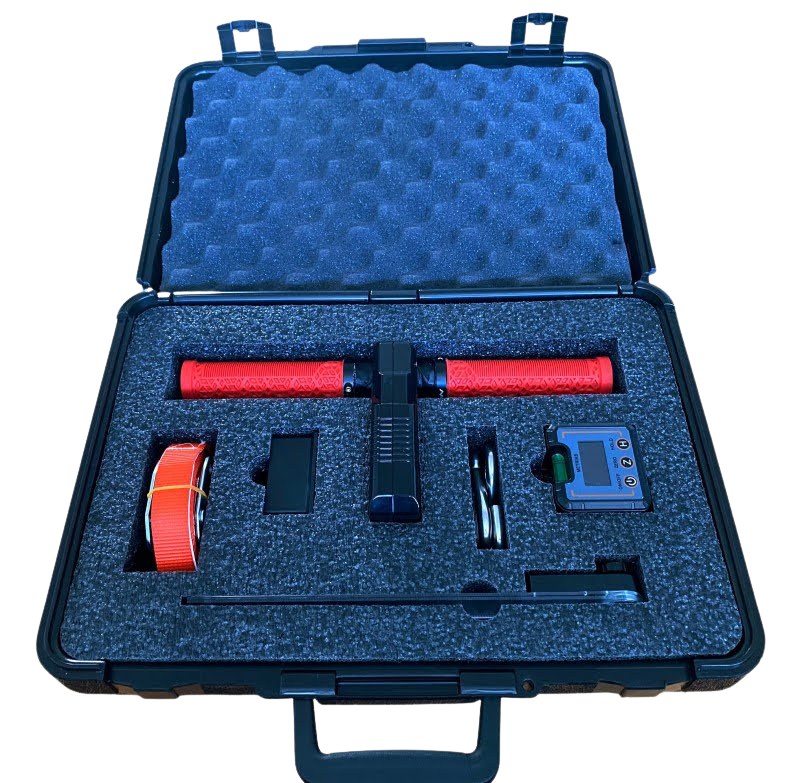
CV is most commonly applied to repeated force measurements. In an FCE setting, this may include grip dynamometers, pinch gauges, static lift testing devices, and isometric push/pull dynamometers.
Related equipment and systems may include:
Related Functional Capacity Evaluation Topics
Clinicians interested in coefficient of variation and FCE reliability may also explore:
- The 1 Rep Max Progressive Lift Test in Functional Capacity Evaluation (FCE)
- Functional Capacity Evaluation Lift Box: Equipment, Dimensions, and Clinical Use
- Functional Capacity Evaluation Pull Test: Isometric vs Dynamic Pull and Force Measurement Explained
- From Hamstrings to Biceps: Practical Set-Ups with the Metriks Push/Pull Device
- Why Do We Measure More Than Once in a Functional Capacity Evaluation?
- Occupational Rehabilitation
Frequently Asked Questions
What does coefficient of variation measure in an FCE?
Coefficient of variation measures variability between repeated trials. In an FCE, it helps clinicians understand whether repeated force efforts were relatively consistent or highly variable.
Is CV a test of effort?
CV can contribute to effort and reliability interpretation, but it is not a standalone effort test. It should be interpreted with biomechanics, symptoms, heart rate response, movement consistency, test behaviour, and the full FCE findings.
Does a high CV prove poor effort?
No. A high CV means the repeated values were variable. The variability may reflect effort inconsistency, but it may also reflect pain, fear avoidance, fatigue, motor control problems, poor understanding of instructions, or changing symptoms.
What CV value is commonly discussed in FCE practice?
A 15% CV threshold is commonly discussed in relation to grip strength testing. However, clinicians should use caution because low and high CV values do not absolutely prove maximal or submaximal effort.
Can CV be used for push/pull testing?
Yes. The same consistency principle can be applied to repeated isometric push and pull trials, although interpretation must consider test position, stance, pain, confidence, instructions, and movement strategy.
Should CV be included in an FCE report?
CV may be useful in an FCE report when repeated force-production trials are clinically relevant. The report should explain what the variability means and how it fits with the broader reliability and performance validity findings.
Learn More About Functional Capacity Evaluation Training
Clinicians interested in effort testing, performance consistency, push/pull testing, material handling assessment, and defensible FCE report writing can explore Metriks Functional Capacity Evaluation Certification and related occupational rehabilitation training programs.
References
- Shechtman O. Using the coefficient of variation to detect sincerity of effort of grip strength: a literature review. Journal of Hand Therapy. 2000;13(1):25-32.
- Dvir Z. Coefficient of variation in maximal and feigned static and dynamic grip efforts. American Journal of Physical Medicine & Rehabilitation. 1999;78:216-221.
- Robinson ME, Dannecker EA. Critical issues in the use of muscle testing for the determination of sincerity of effort. Clinical Journal of Pain. 2004;20(6):392-398.
- Academy of Orthopaedic Physical Therapy, APTA. Current Concepts in Functional Capacity Evaluation: A Best Practice Guideline. 2022.