Rationale for the Occasional to Frequent to Constant Formula in Functional Testing

A recent article I wrote on progressive lift testing generated an important question from an experienced Functional Capacity Evaluation researcher:
What is the rationale behind the formula?
Specifically, why do many rehabilitation professionals estimate:
frequent lifting at approximately 50% of occasional lifting capacity
constant lifting at approximately 20% of occasional lifting capacity
The question matters because clinicians often use these numbers without clearly separating three different ideas.
Those three ideas are:
- measuring safe lifting ability
- classifying lifting ability
- determining whether additional testing is required
When those concepts get blended together, the 50% and 20% values can sound like physiological laws.
They are not.
They are better understood as a practical interpretation method used to translate a demonstrated lifting performance into a DOT or Physical Demand Characteristics strength classification.
Concept #1: Measuring Safe Lifting Ability
A rehabilitation professional may simply be trying to answer a practical clinical question:
Can this worker safely return to a job that requires lifting 25 pounds?
Imagine a worker who injured their shoulder at work while lifting inventory onto warehouse shelving.
Their family physician diagnosed a shoulder strain and provided temporary restrictions that included no lifting greater than 10 pounds.
Several weeks later, the worker is referred to your clinic for rehabilitation.
Treatment goes well.
Pain has improved.
Range of motion has improved.
Strength has improved.
You have progressed the worker through resistance exercises and they are now comfortably performing 30 lb pulley exercises and carrying 25 lb kettlebells around the clinic.
The problem is that the family physician is now asking for your input regarding the lifting restriction.
Should it be removed?
Modified?
Continued?
You feel the worker is doing well, but you would like more confidence before recommending that they return to a job that requires occasional lifting of 25 pounds.
This is where a progressive lift test can be useful.
Rather than relying solely on exercise performance observed during treatment, the clinician can perform a standardized lifting assessment that more closely resembles the actual work demand.
The load is gradually increased while observing: lifting biomechanics, physiological, response, psychophysical response, symptom behavior, movement quality, overall safety.
The purpose is not simply to find the heaviest object someone can lift.
The purpose is to objectively measure safe lifting ability.
The progressive lift test provides a standardized method for evaluating lifting performance while simultaneously assessing biomechanics, symptom response, physiological response, and overall risk of harm.
In many situations, this alone may answer the clinical question.
No full Functional Capacity Evaluation is required.
The therapist has simply used a standardized lifting test to gather better information for clinical decision-making and return-to-work recommendations.
For a deeper explanation of the procedure, read The 1 Rep Max Progressive Lift Test in Functional Capacity Evaluation.
Concept #2: Classifying Lifting Ability
Sometimes the clinician is asked to provide more than an opinion about a specific lifting task.
Let's continue with the previous example.
The worker has completed rehabilitation and is progressing well.
The employer would like to bring them back to work.
However, the employer has multiple job assignments available and those jobs have already been grouped according to physical demand level: Light, Medium, Heavy
The employer's question is no longer:
Can this worker lift 25 pounds?
The question has become:
What type of work can this worker safely perform?
The employer wants to know whether the worker can perform only Light duties or whether they may also be capable of Medium work.
The insurer may be asking similar questions.
A case manager may be trying to identify alternative duties.
A vocational consultant may be considering transferable occupations.
To answer those questions, the clinician may need to provide a strength classification.
This is where the Department of Labor (DOT), Dictionary of Occupational Titles, and Physical Demand Characteristics (PDC) systems enter the conversation.
Once safe lifting ability has been established through progressive testing, the clinician may need to translate that result into: Occasional lifting, Frequent lifting, Constant lifting
This is where extrapolation commonly occurs.
In many ways, clinicians are reverse engineering the DOT table.
A safe lifting anchor is established through progressive testing. That result is then mapped back into the occupational classification framework used by employers, insurers, vocational consultants, and legal stakeholders.
For example, a worker may demonstrate a safe occasional floor-to-waist lift of 50 pounds.
The employer may then ask:
Does that place the worker in the Light, Medium, or Heavy category?
To answer that question, the clinician may use the DOT/PDC framework to estimate occasional, frequent, and constant lifting classifications.
The familiar 50% and 20% relationships come largely from the structure of that classification system.
The purpose is not to predict exactly what the worker can sustain for an entire workday.
The purpose is to translate a demonstrated lifting performance into a strength classification framework that employers and return-to-work stakeholders already understand.
For example, in the traditional DOT/PDC framework:
| Strength Level | Occasional | Frequent | Constant |
|---|---|---|---|
| Light | Up to 20 lb | Up to 10 lb | Negligible |
| Medium | Up to 50 lb | Up to 25 lb | Up to 10 lb |
| Heavy | Up to 100 lb | Up to 50 lb | Up to 20 lb |
When read from the upper end of each category, the pattern becomes easy to see:
- 20 lb occasional becomes 10 lb frequent.
- 50 lb occasional becomes 25 lb frequent and 10 lb constant.
- 100 lb occasional becomes 50 lb frequent and 20 lb constant.
That is the source of the common shorthand:
Frequent lifting is approximately 50% of occasional lifting capacity.
Constant lifting is approximately 20% of occasional lifting capacity.
That does not mean human physiology follows a fixed mathematical formula.
The formula is not really the point.
The point is creating a practical bridge between a demonstrated lifting performance and a strength classification system that decision-makers already understand.
Why the 50% and 20% Values Should Be Called Estimates
The 50% and 20% values are useful because they help clinicians communicate lifting ability using the language of occupational demand classification.
But they should be described as estimates.
They should not be described as precise predictions of full-day work tolerance.
A person who demonstrates a safe 50 lb occasional lift may not necessarily tolerate 25 lb frequent lifting or 10 lb constant lifting over an entire workday.
Actual work tolerance may be influenced by:
- injury type
- general conditioning
- cardiovascular fitness
- movement efficiency
- lifting technique
- symptom response
- work pace
- recovery opportunities
- environmental conditions
- psychophysical tolerance
A worker with high conditioning may tolerate repeated lifting at a higher percentage of their maximal safe lift.
A worker with poor endurance, escalating symptoms, or deteriorating mechanics may tolerate less.
This is why a strength classification and full-day work tolerance should not be treated as identical concepts.
Concept #3: Do We Have Enough Information?
The third concept is determining whether enough information has been collected to answer the referral question.
This is where the discussion begins to move into the Functional Capacity Evaluation context.
One of the principles I try to follow is:
No More Than Necessary.
Testing is progressed only as needed to allow functional limitations to emerge and risk of harm to be determined.
The evaluator continually asks:
Do I have enough information to answer the referral question?
In the first two examples, the answer was yes.
The treating therapist wanted to know whether the worker could safely perform a lifting task. A progressive lift test provided sufficient information.
The employer wanted a strength classification. The progressive lift test plus DOT/PDC classification provided sufficient information.
No additional testing was required.
But not every referral is that straightforward. Let's revisit our case example with a few important changes. This time, the worker was treated somewhere else.
- Recovery did not follow the expected timeline.
- The worker is now nine months post injury.
- No active treatment has occurred for the past three months.
The workers' compensation insurer requests an independent Functional Capacity Evaluation to better understand current work ability and return-to-work potential.
During the evaluation, the worker completes a progressive lift test. The results are helpful, but questions remain. The worker reports persistent pain. Physical conditioning appears reduced. Movement quality changes as testing progresses.
It is not clear whether the observed limitations are primarily related to the original injury, deconditioning, chronic pain, fear of reinjury, or some combination of these factors.
At this point, the question is no longer:
Can this worker lift the weight?
The question becomes:
Do I have enough information to confidently answer the referral question?
In this example, the answer may be no.
- The evaluator may decide to repeat the progressive lift test later in the day to examine consistency.
- The evaluator may also administer another standardized lifting assessment such as the Progressive Isoinertial Lifting Evaluation (PILE) to better understand repeated lifting performance and tolerance.
Additional testing is not performed because more testing is always better. Additional testing is performed because uncertainty remains. This is the essence of the No More Than Necessary principle.
Testing progresses only when additional information is required.
The goal is not to perform every possible test. The goal is to collect enough information to answer the referral question and assign a defensible capacity rating.
Sometimes a single progressive lift test is enough.
Sometimes it is not.
Good FCE design is recognizing the difference.
The PILE as a Second Standardized Test Option
The Progressive Isoinertial Lifting Evaluation, commonly referred to as the PILE, is one standardized option clinicians may consider when additional lifting data is needed.
The PILE is a progressive lifting protocol that requires repeated lifting within a defined time structure.
It can provide information about repeated lifting tolerance, fatigue response, and the ability to sustain lifting performance beyond a single maximal safe lift.
The PILE is not required every time a clinician wants to understand lifting ability.
It is one tool that may be selected when the referral question, job demands, or observed performance indicate that a single progressive lift test does not provide enough information.
Job Simulation May Be More Useful Than Another Generic Test
Sometimes the best next test is not another generic lifting protocol.
Sometimes the best next test is a job simulation.
A job simulation may be appropriate when the actual work task includes factors that are not captured by a standard floor-to-waist lift test, such as:
- awkward reach distance
- asymmetrical lifting
- restricted space
- lifting while wearing equipment
- lifting to or from a specific shelf height
- carrying after lifting
- team lifting requirements
- production-paced material handling
- combined postural and lifting demands
This is why Functional Capacity Evaluation should not be reduced to one number.
The evaluator is not only measuring strength.
The evaluator is determining whether the demonstrated performance represents safe, functional, job-relevant work capacity.
A More Defensible Way to Report the Result
Instead of writing:
The client can lift 50 lb occasionally, therefore they can lift 25 lb frequently and 10 lb constantly.
A more defensible statement would be:
The individual demonstrated a maximal safe floor-to-waist lift of 50 lb during progressive lifting assessment. This supports an occasional lifting capacity within the Medium strength range for this task. Estimated frequent and constant lifting values may be interpreted using DOT/PDC classification conventions; however, direct frequent or constant lifting tolerance was not tested unless otherwise specified.
This wording makes three things clear:
- what was directly tested
- what was classified using DOT/PDC conventions
- what was not directly measured
That is a cleaner and more defensible reporting structure.
The Clinical Bottom Line
The rationale for estimating frequent and constant lifting from a progressive lift test is not that human lifting endurance follows a fixed 50% and 20% law.
The rationale is that clinicians may first establish safe lifting ability through progressive testing and then translate that result into a DOT/PDC strength classification when a strength rating is required.
That process is best understood as reverse engineering the DOT/PDC table.
Concept 1 is measurement.
Concept 2 is classification.
Concept 3 is deciding whether more information is required.
Concepts 1 and 2 may occur in routine treatment or occupational rehabilitation when a clinician is helping answer a practical return-to-work question.
Concept 3 is more typical of a formal Functional Capacity Evaluation, where the evaluator must determine whether the available evidence is sufficient to assign a defensible capacity rating.
The decision should be guided by the referral question, the job demands, the observed performance, and the principle of No More Than Necessary.
Frequently Asked Questions
Can a progressive lift test be used outside a full Functional Capacity Evaluation?
Yes. A clinician may use a progressive lift test during treatment or occupational rehabilitation to help answer a specific return-to-work question, such as whether a worker can safely lift 25 lb.
Is frequent lifting always 50% of occasional lifting?
No. The 50% value is a common DOT/PDC interpretation shortcut. It is useful for classification, but it should not be treated as a universal physiological law.
Is constant lifting always 20% of occasional lifting?
No. The 20% value reflects the upper-bound relationship in parts of the DOT/PDC strength table. Actual constant lifting tolerance depends on the worker, task, pace, recovery, fitness, symptoms, and biomechanics.
Why do clinicians use these estimates?
Clinicians use these estimates because employers, insurers, vocational professionals, and legal stakeholders often need lifting results expressed in DOT or PDC strength categories.
What does reverse engineering the DOT table mean?
It means the clinician first establishes a demonstrated lifting capacity through progressive testing, then maps that result backward into the DOT/PDC classification framework to estimate occasional, frequent, and constant work categories.
When does this become an FCE issue?
It becomes an FCE issue when the question requires a broader functional capacity opinion, sustained tolerance testing, comparison to job demands, multiple data points, or a defensible capacity rating across several work-related functions.
What should a clinician do if one progressive lift test is not enough?
The clinician may repeat the test later, perform another standardized lifting assessment such as the PILE, conduct a sustained tolerance assessment, use a material handling circuit, or complete a job simulation activity.
What is the No More Than Necessary principle?
No More Than Necessary means testing is progressed only as needed to allow functional limitations to emerge and risk of harm to be determined. The evaluator does not add testing unless it improves the clinical answer.
Related Articles
Learn More About Functional Capacity Evaluation Training
Clinicians interested in progressive lifting, material handling assessment, DOT/PDC classification, job simulation, return-to-work testing, and defensible FCE report writing can explore Metriks Functional Capacity Evaluation Certification.
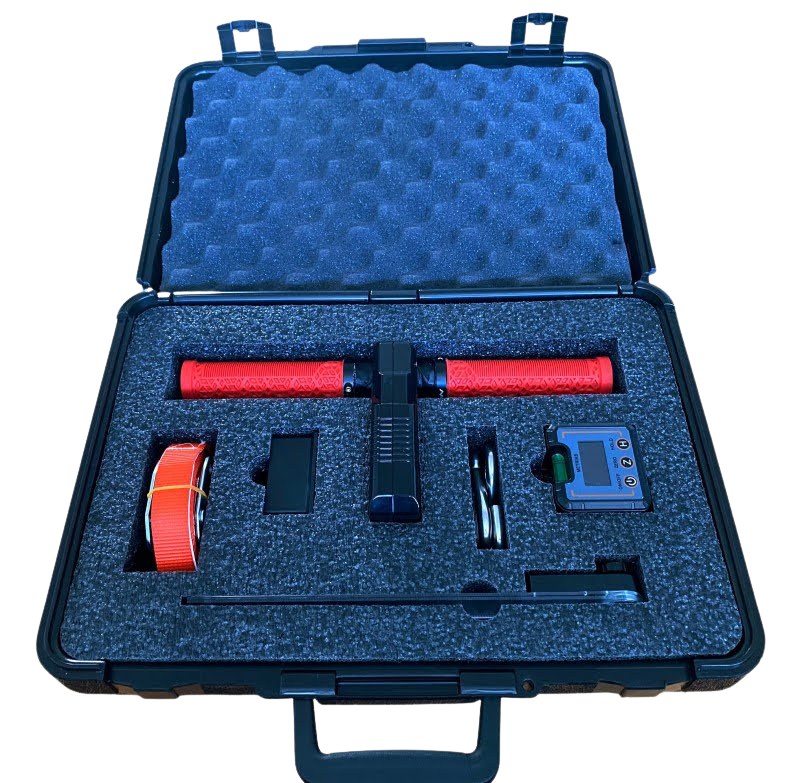
Clinics building an FCE program can also review FCE in a Box, a complete hardware system for standardized Functional Capacity Evaluation testing.
References
- Academy of Orthopaedic Physical Therapy, APTA. Current Concepts in Functional Capacity Evaluation: A Best Practices Guideline. 2018.
- MacMasters W, Allison S, Wickstrom R, McMenamin P. Functional Capacity Evaluation and Disability Determination. Academy of Orthopaedic Physical Therapy Independent Study Course.
- U.S. Department of Labor. Dictionary of Occupational Titles and physical demand classifications.
- Matheson LN. Physical Demand Characteristics framework and work capacity classification materials.
- Mayer TG, Barnes D, Nichols G, et al. Progressive Isoinertial Lifting Evaluation literature.
- Gross DP, Battié MC, Asante A. Development and validation of a short-form Functional Capacity Evaluation for use in claimants with low back disorders. Journal of Occupational Rehabilitation. 2006.
- Branton EN, Arnold KM, Appelt SR, Hodges MM, Battié MC, Gross DP. A short-form Functional Capacity Evaluation predicts time to recovery but not sustained return-to-work. Journal of Occupational Rehabilitation. 2010.
- Saunders RL, Beissner KL, McManis BG. Estimates of frequent lifting capacity from Functional Capacity Evaluation data. 1997.