I think arrival notes are one of the most important parts of an FCE.
Arrival Notes in Functional Capacity Evaluation (FCE): Why the Assessment Starts Before Formal Testing

One of the most overlooked parts of a Functional Capacity Evaluation (FCE) may happen before the formal testing even begins.
Before the lift crates, push/pull testing, grip dynamometers, positional tolerance testing, and standardized material handling assessments, the evaluator may already be observing functional movement.
Walking across the parking lot.
Getting out of the vehicle.
Opening doors.
Climbing stairs.
Reaching to hang up a jacket.
Standing at reception.
These observations are often referred to as arrival notes.
In occupational rehabilitation, arrival notes provide real-world functional context that may later be compared with formal testing findings, self-reported limitations, biomechanics, pacing, symptom behavior, and overall movement consistency throughout the Functional Capacity Evaluation.
That distinction matters.
Arrival observations should never be treated as “gotcha” moments or attempts to trap the individual. A defensible Functional Capacity Evaluation is not built around isolated observations or assumptions. It is built around clinical reasoning, standardized testing, movement analysis, physiological response, consistency, and the integration of multiple data points.
Arrival notes are simply one piece of that larger clinical picture.
Why Arrival Notes Matter During a Functional Capacity Evaluation
Daily life does not happen inside isolated test stations.
People do not move through the real world by performing only standardized floor-to-waist lifts or isolated grip strength trials. Real-world function involves transitions, walking, stairs, doors, reaching, carrying, sitting tolerance, standing tolerance, pacing, and movement adaptation across unpredictable environments.
This is why arrival observations can be clinically useful during Functional Capacity Evaluation and occupational rehabilitation.
For example, before testing even begins, the evaluator may observe:
- walking speed and gait pattern
- sit-to-stand transitions
- weight shifting during standing
- use of handrails on stairs
- tolerance for prolonged sitting after driving
- door-opening mechanics
- guarded movement
- carrying behavior
- reaching tolerance
- general pacing and coordination
These observations may later help the evaluator interpret formal testing results within the context of overall demonstrated function.

Arrival Notes Are Not About Catching People
This is one of the most important concepts for rehabilitation professionals to understand.
Arrival notes are not intended to prove deception, exaggeration, malingering, or dishonesty.
They are observational data.
Nothing more.
For example, if someone reports difficulty tolerating prolonged sitting but drove 90 minutes to the clinic, that observation does not automatically invalidate the report.
Instead, it creates additional clinical questions:
- Did the individual stop multiple times during the drive?
- Did symptoms increase afterward?
- Were position changes required?
- Did symptoms escalate later in the day?
- Was the drive tolerated only temporarily?
A good FCE evaluator does not jump to conclusions based on isolated observations.
The evaluator gathers information and looks for consistency across the entire assessment process.
That includes:
- self-report
- biomechanics
- heart rate response
- movement quality
- performance consistency
- symptom behavior
- standardized testing
- functional carryover between tasks
Arrival notes are simply one component of that broader occupational rehabilitation framework.
Examples of Functional Observations During Arrival
Experienced PTs, OTs, kinesiologists, and occupational rehabilitation professionals often gather meaningful information during ordinary movement before formal testing begins.
Examples may include:
Parking Lot Observations
- walking tolerance
- gait symmetry
- use of assistive devices
- speed of movement
- turning tolerance
- guarding behavior
Vehicle Transfers
- sit-to-stand mechanics
- trunk rotation tolerance
- upper extremity support use
- movement hesitation
- transition pacing
Door Management
- push versus pull tolerance
- grip strategy
- single-arm versus bilateral use
- coordination
- balance during movement transitions
Stair Negotiation
- handrail use
- step-to versus reciprocal gait
- pace changes
- weight acceptance
- fatigue response
These observations often become particularly valuable when compared with formal positional tolerance testing, lifting mechanics, push/pull testing, and work simulation tasks later in the Functional Capacity Evaluation.

Why Arrival Notes Connect to the Bigger FCE System
Arrival observations should not be viewed in isolation.
They connect directly to broader Functional Capacity Evaluation methodology, including:
- movement consistency
- occupational biomechanics
- functional carryover
- return-to-work testing
- work simulation
- effort and reliability analysis
- material handling assessment
- employer functional testing
- defensible report writing
For example, if an individual demonstrates fluid stair climbing during arrival but later demonstrates severe difficulty during standardized stair testing, the evaluator may need to explore why the presentation changed.
Similarly, if someone demonstrates guarded walking mechanics before testing but progressively loosens movement patterns during the evaluation, that information may also become clinically meaningful.
The key principle is not to over-interpret single moments.
The key principle is to identify patterns across the entire Functional Capacity Evaluation process.
Arrival Notes and Clinical Reasoning
One of the biggest differences between experienced and inexperienced FCE evaluators is the ability to integrate observations without prematurely forming conclusions.
Strong evaluators continuously gather information while remaining open to multiple explanations.
This requires clinical restraint.
For example, guarded movement may reflect:
- pain
- fear avoidance
- fatigue
- motor control limitations
- anxiety
- true biomechanical restriction
- learned movement adaptation
The evaluator’s role is not to assume intent.
The evaluator’s role is to document observed function and integrate findings into defensible clinical reasoning.
This is one reason arrival notes remain valuable within modern occupational rehabilitation and Functional Capacity Evaluation methodology.
Questions Evaluators Commonly Ask During Arrival
Experienced evaluators often ask simple conversational questions during the arrival process.
Examples include:
- “How was your drive today?”
- “How long did it take you to get here?”
- “How was traffic?”
- “Where did you park?”
- “Was the elevator working today?”
To someone outside occupational rehabilitation, this may sound like ordinary small talk.
Clinically, it provides context regarding physical demands already completed before formal testing begins.
Equipment and Systems Used During Functional Capacity Evaluation
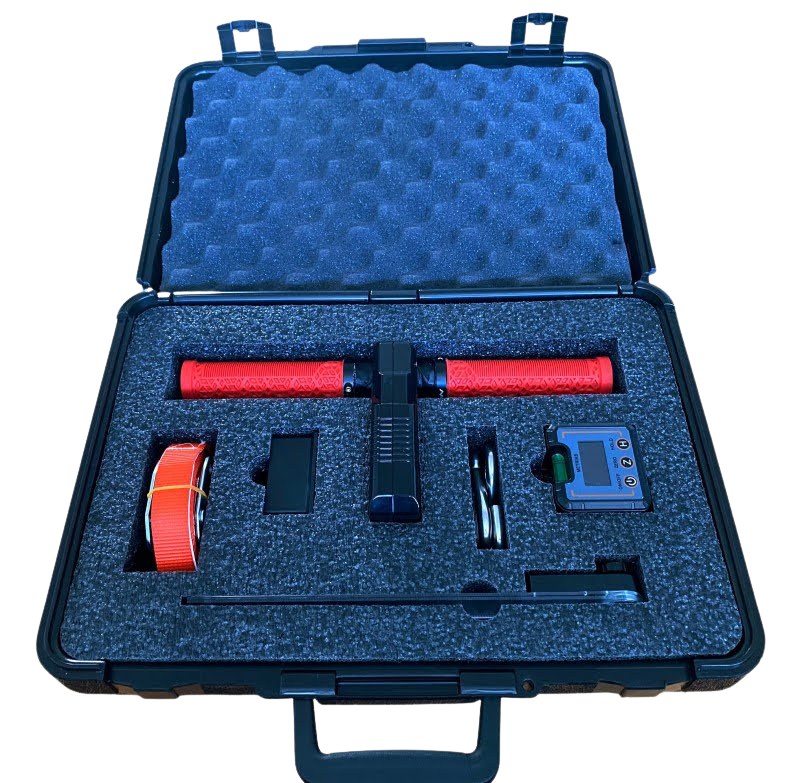
Arrival notes are only one component of a larger Functional Capacity Evaluation system that may also include:
- standardized lift crates
- functional lift stations
- push/pull dynamometers
- grip dynamometers
- heart rate monitoring
- Borg RPE scales
- positional tolerance testing
- work simulation stations
Related equipment and systems may include:
Related Functional Capacity Evaluation Topics
- Understanding Coefficient of Variation (CV) in Functional Capacity Evaluation
- The 1 Rep Max Progressive Lift Test in Functional Capacity Evaluation (FCE)
- Functional Capacity Evaluation Lift Box: Equipment, Dimensions, and Clinical Use
- Why Do We Measure More Than Once in a Functional Capacity Evaluation?
- Occupational Rehabilitation
- Functional Capacity Evaluation Pull Test: Isometric vs Dynamic Pull and Force Measurement Explained
Frequently Asked Questions
What are arrival notes in a Functional Capacity Evaluation?
Arrival notes are functional observations documented before formal testing begins during a Functional Capacity Evaluation. These observations may include walking, stair climbing, transfers, door management, pacing, and general movement behavior.
Why are arrival notes important in occupational rehabilitation?
Arrival notes provide real-world functional context that can later be compared with standardized testing, biomechanics, symptom behavior, and overall movement consistency throughout the Functional Capacity Evaluation.
Are arrival notes meant to catch people exaggerating?
No. Arrival notes are not “gotcha” moments. They are observational data used as part of broader clinical reasoning and should never be interpreted in isolation.
What kinds of movements are commonly observed?
Common observations include walking tolerance, stair climbing, sit-to-stand transitions, door opening, balance, carrying behavior, pacing, and reaching movements.
Do arrival observations affect the final FCE interpretation?
They may contribute to the overall interpretation when considered alongside standardized testing, biomechanics, symptom response, physiological measures, and movement consistency across the entire evaluation.
Learn More About Functional Capacity Evaluation Training
Clinicians interested in Functional Capacity Evaluation methodology, biomechanics, occupational rehabilitation, work simulation testing, and defensible report writing can explore Metriks Functional Capacity Evaluation Certification and related occupational rehabilitation training programs.