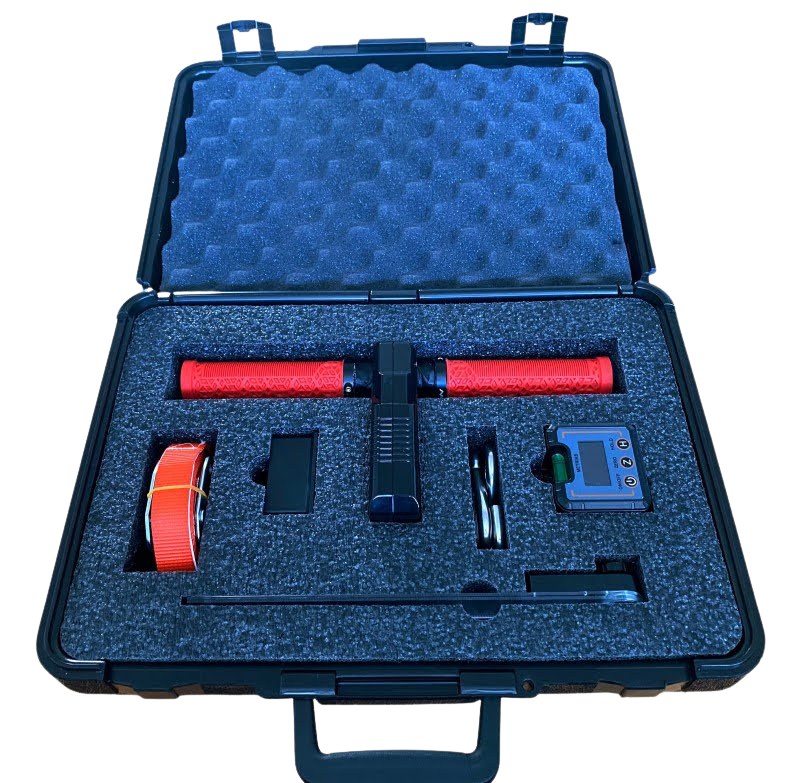
Do you measuring pinch grip in your Functional testing?
Do you measuring pinch grip in your Functional testing?
Pinch grip testing is included in a Functional Capacity Evaluation because it provides a direct measure of fine motor strength and precision that cannot be captured through gross grip strength alone.
Many work tasks rely on sustained or repetitive pinching rather than power grip, so without this measure the evaluation would miss a key component of upper extremity function.
In practice, pinch testing is not interpreted as a single value but as a pattern.
The first level of interpretation is bilateral comparison. The left and right sides should demonstrate a relatively consistent relationship, with expected minor differences based on hand dominance. When there is a large discrepancy between sides that is not explained by injury history, pain behaviour, or known pathology, it raises concern for either true impairment or inconsistent effort.
The second level of interpretation is the internal relationship between the three pinch positions. Key and palmar pinch involve larger muscle groups and more stable joint positioning, so they should produce higher force values than tip pinch, which isolates distal flexors and requires more precise motor control. When this expected relationship is not present, such as tip pinch exceeding key or palmar values, the findings are not considered physiologically consistent and this becomes relevant in the context of effort testing. This internal consistency check is one of the reasons pinch testing is included in the effort testing section of many FCE protocols.
Pinch testing also provides indirect information about neurological integrity. The different pinch positions load different nerve distributions and muscle groups, including median and ulnar nerve innervated structures. Weakness patterns that are isolated to a specific pinch type can help differentiate between peripheral nerve involvement, tendon dysfunction, or global deconditioning.
From a functional standpoint, pinch strength is used to determine whether an individual can perform repetitive or sustained fine motor tasks across a workday. When values fall within expected normative ranges for age and sex, it suggests the individual can tolerate typical pinching demands. When values fall below expected ranges, or when the job requires high force or high frequency pinching, the results need to be interpreted against the physical demands of the job.
We cover this in our upcoming in-person Functional Capacity Evaluation workshops in Calgary and Toronto
Details and registration:
https://lnkd.in/eM5YG4bB
https://lnkd.in/eXaMFWrc