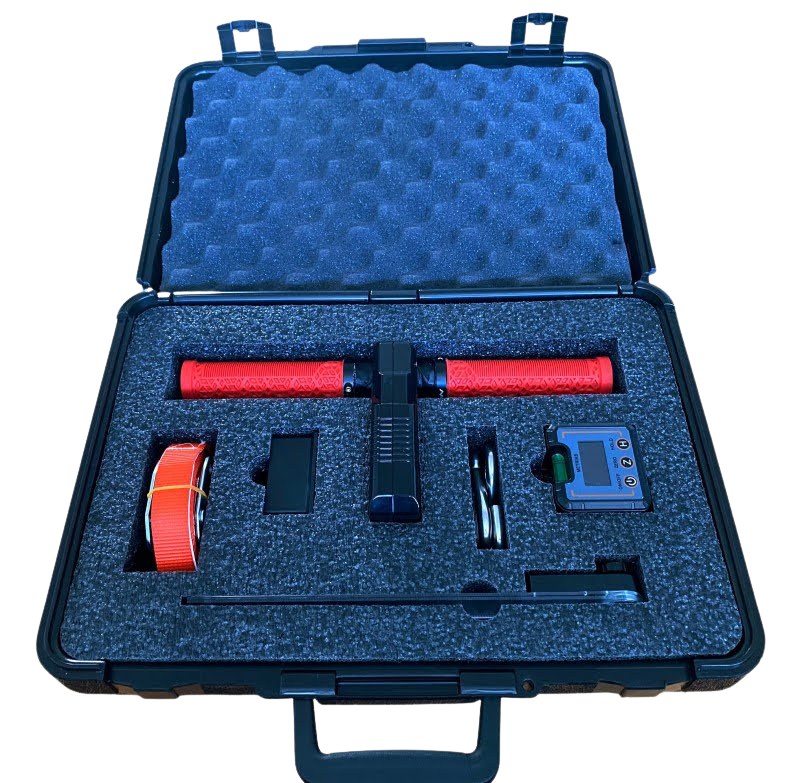
From Hamstrings to Biceps: Practical Set-Ups with the Metriks Push/Pull Device.
From Hamstrings to Biceps: Practical Isometric Testing Set-Ups with the Metriks Push/Pull Device
A curl bar, ankle strap, pulley handle, and a fixed anchor point can create dozens of testing options in rehabilitation and Functional Capacity Evaluation (FCE).
From hamstrings to biceps, clinicians can build standardized isometric testing systems using equipment that already exists in most clinics.
The key is not the attachment itself.
The key is creating a stable, repeatable, objective testing system.
position then Zero by Kevin Cairns
What You’ll See in the Video
The video demonstrates several practical isometric testing configurations using the Metriks Push/Pull Device and common rehabilitation equipment.
- An isometric hamstring test performed in sitting using an ankle strap and pulley base
- A bilateral isometric bicep test using a curl bar attached to a squat rack
- A single-arm bicep test using a triangle pulley handle and weight machine anchor point
These are simple examples of how clinicians can adapt existing clinic infrastructure into objective force testing systems.
The Principle Is Simple
Always secure the system to a fixed item.
Zero the gauge after set-up.
Use attachments already available in your clinic.
Curl bars, pulley handles, ankle straps, squat racks, cable systems, and rack-mounted anchors can all become part of a standardized testing system when combined with a reliable force gauge.
The attachment itself is often the easy part.
The harder part is ensuring the system is repeatable, mechanically stable, and appropriate for the movement being tested.
Why Standardization Matters in Functional Testing
One of the biggest challenges in rehabilitation force testing is consistency.
If the setup changes between trials, clinicians may not know whether changes in force output are related to actual performance differences or simply differences in positioning, stabilization, leverage, or anchor mechanics.
In Functional Capacity Evaluation, objective testing depends on standardized procedures.
That includes:
- consistent positioning
- consistent stabilization
- consistent joint angles
- consistent instructions
- consistent anchor points
- consistent force application
A properly anchored isometric testing system helps reduce variability and improve repeatability.
Why Isometric Testing Is Useful in Rehabilitation and FCE
Isometric testing allows clinicians to measure force production while minimizing movement.
Depending on the clinical situation, this can be useful for:
- upper extremity testing
- lower extremity testing
- baseline strength assessment
- side-to-side comparison
- work simulation preparation
- return-to-work evaluation
- pain-limited testing situations
- progress tracking during rehabilitation
Isometric testing is also highly adaptable.
A single force gauge can be used with dozens of different configurations depending on the clinical question being asked.
Clinical Reasoning Matters More Than Equipment
The goal is not to collect random force numbers.
The goal is to collect clinically meaningful information.
That requires understanding:
- what tissue or movement is being tested
- whether stabilization is adequate
- whether substitution patterns are occurring
- whether the setup reflects the functional demand being evaluated
- whether the testing procedure can be reproduced later
This is where clinical reasoning becomes more important than the equipment itself.
A sophisticated device with poor positioning or inconsistent stabilization produces poor data.
A simple, well-standardized setup often produces better information.
Building Testing Systems Using Equipment Already in Your Clinic
Most rehabilitation clinics already have useful anchor systems and attachments available.
Examples include:
- squat racks
- cable machines
- pulley systems
- TRX anchors
- fixed poles or columns
- treatment tables
- curl bars
- ankle cuffs
- rowing handles
- triangle pulley handles
When combined with an objective force gauge, these systems can create highly adaptable testing options without requiring large dedicated testing machines.
Objective Testing in Return-to-Work Rehabilitation
Objective force testing is particularly useful in occupational rehabilitation and return-to-work programs.
Clinicians are often asked to determine:
- whether force production is improving
- whether side-to-side deficits remain present
- whether a worker can tolerate specific physical demands
- whether symptoms increase under load
- whether testing demonstrates consistency across trials
Standardized isometric testing can contribute to those decisions when used appropriately within the larger clinical picture.
No single test determines work ability.
Instead, clinicians integrate multiple sources of information including medical history, physical examination, symptom response, biomechanics, positional tolerance, material handling performance, and objective testing.
Practical Problem-Solving Is a Major Part of FCE Training
This is the type of practical problem-solving we teach in Functional Capacity Evaluation training.
Not just how to perform a test, but how to build standardized, repeatable testing systems using the tools already around you.
Clinicians often assume they need expensive dedicated systems for every type of force test.
In reality, understanding mechanics, stabilization, positioning, and standardization is often more important than purchasing additional equipment.
Related Functional Capacity Evaluation Articles
- Understanding Coefficient of Variation (CV) in Functional Capacity Evaluations
- The 1 Rep Max Progressive Lift Test in Functional Capacity Evaluation
- Functional Capacity Evaluation Lift Box: Equipment, Dimensions, and Clinical Use
- Functional Capacity Evaluation Certification Training
Upcoming FCE Certification Workshop – Toronto
In collaboration with Metriks Education Inc., the #CKA will be hosting the next Functional Capacity Evaluation Certification Workshop in Toronto.
This hands-on workshop is designed for rehabilitation professionals looking to strengthen their skills in:
- functional assessment
- objective testing
- return-to-work planning
- force measurement
- material handling assessment
- standardized testing procedures
Students and new graduates are encouraged to attend.
Date: Saturday, May 30, 2026
Time: 8:30 AM – 4:30 PM
Location: Toronto, ON
Instructor: Kevin Cairns (Metriks)
Limited spots available.